
Trigger Finger and Hand Tendon Ultrasound in Ajax
Why does a finger catch, click or lock? Ajax patients can learn how hand tendons glide, what ultrasound can show about trigger finger, and how to prepare.
· 8 min read
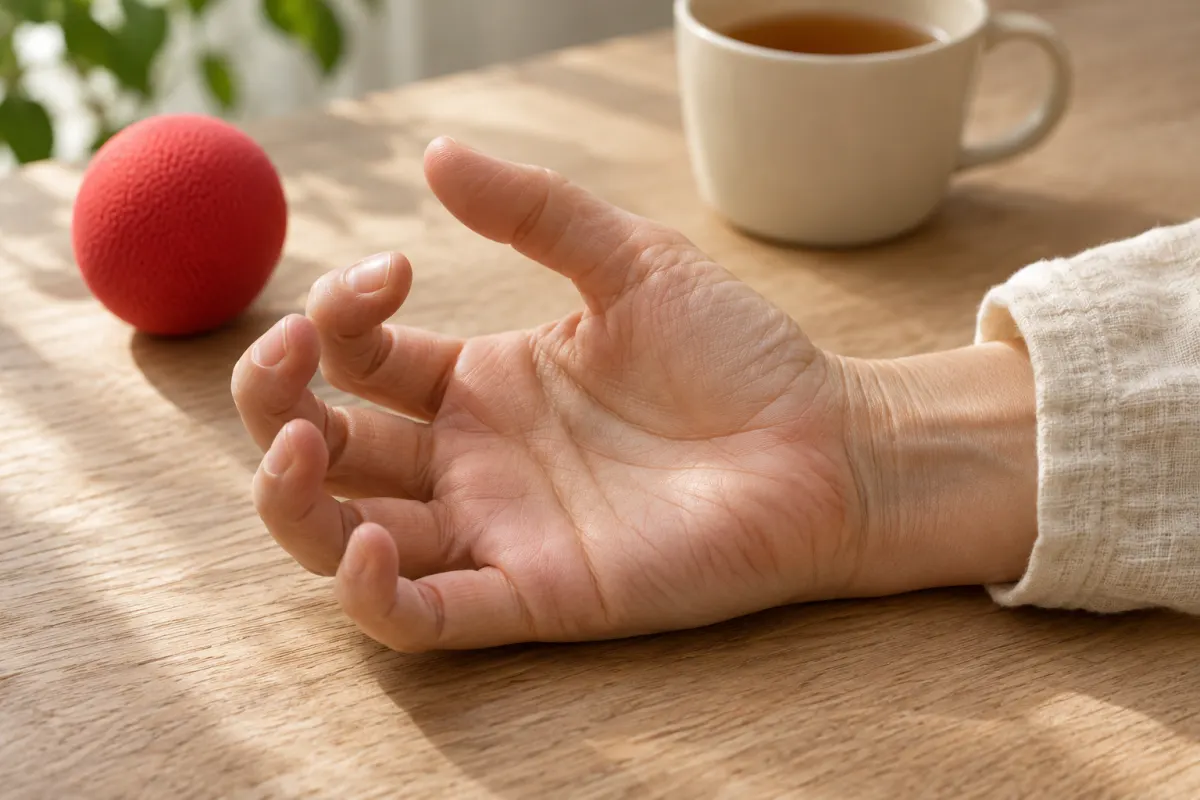
Curl your fingers into a loose fist and open them again. The movement feels effortless, but it depends on a set of long tendons running from muscles in the forearm all the way to the tips of the fingers, gliding back and forth through narrow tunnels in the palm. Each tendon slides hundreds or thousands of times a day as you type, grip a steering wheel, carry groceries or hold a phone.
Most of the time that system runs without a hitch. When it does not, one of the most recognisable results is trigger finger: a finger or thumb that catches, clicks, or briefly locks in a bent position before snapping straight. It is a common hand problem, and it is often diagnosed by a provider from the history and a hands-on examination alone. Sometimes, though, a provider wants a closer look, and that is where hand tendon ultrasound comes in.
This article explains what happens inside a triggering finger, when imaging tends to be useful, what a hand ultrasound at our Ajax clinic is like, and what it can and cannot add.
The pulley system inside your fingers
The tendons that bend your fingers are called flexor tendons. They run along the palm side of each finger, inside a protective sheath lined with a slippery fluid that helps them glide.
To keep the tendons close to the bone as the finger bends, the sheath is reinforced at intervals by bands of tough tissue called pulleys. Without them, the tendons would lift away from the bone like a bowstring every time you made a fist, and your grip would be much weaker.
The first of these pulleys sits at the base of the finger, roughly where the finger meets the palm. It is a tight fit, and it is the spot where trigger finger usually begins.
What goes wrong in trigger finger
In trigger finger, the space between the tendon and that first pulley becomes too tight. This can happen because:
- the pulley thickens
- the tendon itself swells or develops a small nodule
- the sheath lining becomes irritated and inflamed
When a thickened section of tendon tries to pass through the narrowed pulley, it catches. A bit more force pops it through, which produces the click or snap. In some cases the tendon cannot get back through at all without help, and the finger stays bent until it is straightened with the other hand.
The thumb is commonly affected, as are the ring and middle fingers, though any digit can be involved and more than one finger can trigger at the same time.
How it tends to feel
People describe trigger finger in a few typical ways:
- Catching or clicking when bending or straightening a finger
- Stiffness, often worst first thing in the morning
- A tender bump in the palm at the base of the affected finger
- Locking, where the finger stays bent and has to be pushed straight
- Pain at the base of the finger or thumb, sometimes spreading along the finger
- A feeling that the problem is actually in the knuckle further up the finger, even though the catching happens at the base
Symptoms often come on gradually. Some people notice them after a period of heavy gripping, such as gardening, renovation work or a new tool at work, while others cannot point to a cause.
Who is more likely to develop it
Trigger finger can affect anyone, but providers often see it more in people who:
- are in middle age or older
- have diabetes
- have rheumatoid arthritis or certain other inflammatory conditions
- do a lot of repetitive or forceful gripping
- have had carpal tunnel syndrome, as the two conditions often occur together
If you are noticing tingling or numbness in your fingers as well as catching, mention both to your provider. Our article on carpal tunnel and wrist ultrasound explains how the median nerve is assessed.
When a hand problem needs urgent care
Most trigger fingers are uncomfortable rather than urgent. A few hand situations, however, should not wait for a routine appointment. Contact your provider promptly, or go to an urgent care centre or emergency department, if you have:
- a finger that becomes red, hot, swollen along its whole length and very painful, especially after a cut, bite or puncture wound, or with fever
- a finger that suddenly cannot bend or straighten after an injury
- a deep cut on the hand or fingers
- numbness or colour change in a finger after an injury
Infections of the tendon sheath can spread quickly and need medical attention the same day. A community imaging clinic is not set up for urgent assessment.
Does trigger finger need a scan?
Not always. Many providers can recognise trigger finger by asking how your finger behaves and feeling the palm as you bend and straighten it. In that case, imaging may not be needed before care is discussed.
A provider may consider an ultrasound when:
- the diagnosis is uncertain, or the symptoms are not typical
- there is a lump in the palm or finger that they want to describe
- the finger is painful and swollen in a way that suggests something else is going on
- symptoms continue despite earlier care
- they want more detail before discussing next steps, such as a referral to a hand specialist
An X-ray answers a different question. It shows bones and joints well but does not show tendons or pulleys clearly. If your provider is concerned about arthritis, a fracture or other bone changes, they may order an X-ray as well. Our practical guide to hand and wrist X-rays covers that exam.
What ultrasound can show in the hand
Ultrasound is well suited to the hand because the tendons sit close to the skin, where high-frequency sound waves give detailed images. It uses no radiation. Just as important, it is a live examination: the sonographer can watch tendons move as you bend and straighten your finger.
For a finger that catches or locks, an ultrasound may help describe:
- Thickening of the first pulley at the base of the finger
- Swelling or a nodule on the tendon near the pulley
- Fluid or thickening in the tendon sheath, which can go along with irritation
- How the tendon glides, including whether it catches as you move
- Blood flow in the area, using Doppler, which can sometimes show signs of inflammation
Ultrasound can also look at other causes of a lump or pain in the palm and fingers, such as a small fluid-filled cyst on the tendon sheath, a thickening of the tissue in the palm, or swelling around the small finger joints. For more on how ultrasound describes lumps, see our article on soft tissue ultrasound for lumps and bumps.
What it does not do
An ultrasound does not decide treatment, and the images are only one part of the picture. Your provider combines the report with your symptoms, your examination and your general health. A report that says “normal” is still useful; it can steer the provider toward another explanation.
What the appointment is like
A hand ultrasound is usually one of the more relaxed scans people have.
- No special preparation is generally needed for musculoskeletal ultrasound. You will receive any specific instructions when you book.
- Take off rings before you leave home, especially on the affected hand. Swelling can make them hard to remove later.
- Wear a top with sleeves that roll up easily past the wrist.
- Bring your health card and requisition.
You will usually sit beside the exam table and rest your hand on a cushion or the table surface, palm up. The sonographer applies a small amount of gel and moves a compact probe over the palm and finger. They may compare the affected finger with a healthy one, or with the same finger on your other hand.
You will likely be asked to bend and straighten the finger slowly while the sonographer watches. If doing that triggers the catch or causes pain, say so. That information can be helpful, but there is no need to force a painful movement.
The sonographer captures images and short recordings during the scan, and a report is sent to the provider who ordered the exam. They will go over the findings with you.
After the scan: options your provider may discuss
Treatment for trigger finger depends on how long symptoms have been present, how severe they are and your overall health. Your provider is the right person to explain options and their pros and cons. In general terms, conversations about trigger finger can include:
- rest from aggravating activities or changes to how you grip
- a splint to limit movement for a period of time
- hand therapy
- an injection, for some people
- a referral to a hand specialist to discuss a procedure if symptoms persist
Please do not start, stop or change any treatment based on this list. It is here only to show that an ultrasound result usually feeds into a wider conversation rather than a single fixed path.
A few notes to bring
Before your appointment, it can help to jot down:
- which finger or thumb is affected, and on which hand
- when you first noticed catching, clicking or stiffness
- whether it is worse at certain times of day
- whether the finger ever stays locked, and how you straighten it
- activities at work or home that involve heavy or repetitive gripping
- relevant health conditions, such as diabetes or arthritis
Booking a hand ultrasound in Ajax
Rossland Diagnostic Clinic offers musculoskeletal ultrasound at Unit 102, 300 Rossland Road East, Ajax, with free parking and ground-floor access. Patients come to us from Ajax, Pickering, Whitby and across Durham Region, Monday to Friday from 9:00am to 5:00pm and Saturday from 8:00am to 3:30pm.
If your provider has given you a requisition for a hand or finger ultrasound, call 905-426-3111 or request an appointment, and our team will help you choose a time.