Family History of Breast Cancer: Screening Questions in Ajax
How does a family history of breast cancer change screening? Ajax women can learn which relatives matter, what to gather and which questions to ask a provider.
· 8 min read
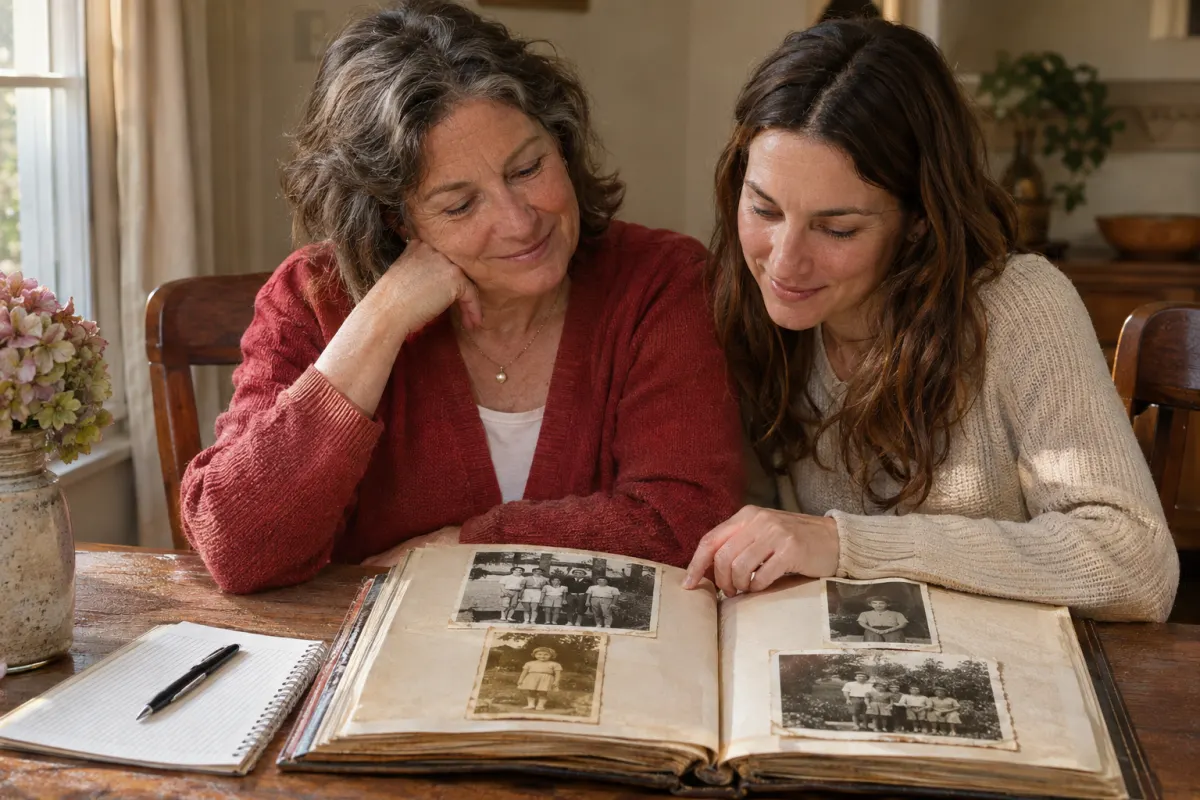
My mother had breast cancer. Should I start mammograms earlier? My aunt did, but she was in her seventies. Does that count? My grandmother on my father’s side had it. Does his side matter at all? A cousin was just tested for a gene. What does that mean for me?
These are some of the most common questions women bring to their providers once breast cancer has touched their family. They are good questions, and they rarely have one-line answers. A family history can change when screening starts, how often it happens and which tests are involved, or it can turn out to make very little difference to your plan. The details decide which.
This article will not tell you which group you fall into. That is a conversation for you and your health-care provider. What it can do is help you understand why the details matter, gather the information that makes the conversation useful, and know what to ask when you sit down with your provider in Ajax, Pickering, Whitby or wherever you receive care.
Why family history is part of the picture
Breast cancer is common, and most people who develop it do not have a strong family history. Age is one of the most important factors for everyone. Even so, family history matters for two reasons.
First, relatives share genes. A small proportion of breast cancers are linked to inherited changes in specific genes that can raise the risk of breast cancer, and sometimes of other cancers, considerably. When a family carries one of these changes, several relatives across generations are often affected, sometimes at younger ages.
Second, relatives often share more than genes: habits, environments and other influences that can play a part. A family pattern does not always mean an inherited gene.
Providers use family history, together with your own health history, to estimate whether your risk is close to average or meaningfully higher than average. That estimate guides screening advice.
The details that change the conversation
When your provider asks about family history, a few details carry particular weight. Before your appointment, it is worth trying to find out:
Who was affected
- First-degree relatives: parents, siblings and children
- Second-degree relatives: grandparents, aunts, uncles, nieces, nephews, half-siblings
- Both sides of the family. Your father’s side counts just as much as your mother’s. Inherited gene changes can be passed through men, even if the men themselves never developed cancer.
How old they were
The age at diagnosis is one of the most important pieces of information. A diagnosis at a younger age tends to carry different weight than one later in life. If you do not know the exact age, a rough decade, such as “in her forties,” is still helpful.
What type of cancer
Bring what you know about:
- breast cancer, including whether it affected one breast or both
- ovarian cancer, which is closely linked with some of the same inherited gene changes
- breast cancer in a male relative, which is uncommon and is often considered significant
- other cancers in the family, such as prostate or pancreatic cancer, which can sometimes be relevant
Genetic testing in the family
If any relative has had genetic testing, try to learn the result and, if possible, the name of the gene. A copy of the relative’s result letter, shared with their permission, is the most useful version. “She tested positive for something” is a place to start, but your provider may need specifics to act on it.
Your family’s background
Some inherited gene changes are more common in certain ancestries. Mentioning your family’s origins can be useful context for your provider.
When you do not know much
Plenty of people know very little about their family’s health. Families are separated by distance, migration, adoption, estrangement or simple silence. Older generations sometimes did not discuss cancer at all, or described it vaguely as “a women’s problem” or “a growth.”
If that sounds familiar:
- Ask the relatives you can, gently, and explain why you are asking.
- Write down what you hear even when it is uncertain, and mark it as uncertain.
- Tell your provider what you do not know. “I’m adopted and have no family history” or “My father’s family is in another country and I’ve never been able to ask” are useful facts in themselves.
An incomplete history is still a history. Your provider can work with uncertainty.
How screening may differ
For women at average risk in Ontario, the Ontario Breast Screening Program (OBSP) provides routine screening mammograms. Women aged 40 to 74 can self-book a routine screening mammogram without a referral at an OBSP site, including our Ajax clinic. Our guide to booking an OBSP mammogram from age 40 explains how that works.
A family history may lead your provider to recommend something different. Depending on your situation, that might include:
- starting screening earlier than you otherwise would
- screening more often
- additional types of imaging alongside mammography
- a referral for genetic assessment or counselling
Ontario also has a separate screening pathway for people considered at high risk, which is arranged through a referral from a health-care provider and involves its own eligibility assessment. Whether you qualify, and where that screening would take place, is something to discuss with your provider. If you are not sure whether self-booking a routine screening is right for you, ask your provider before booking.
Breast density can also come into the picture. If your mammogram reports describe dense tissue, your provider will consider that alongside your family history. Our article on breast density on a mammogram report explains what the categories mean.
Genetic assessment: a step, not a verdict
If your family history suggests a possible inherited pattern, your provider may suggest genetic assessment. This usually begins with a detailed review of your family tree with a genetics professional, before any testing is decided.
Some things worth knowing:
- Not everyone with a family history is offered genetic testing. The assessment helps decide whether testing is likely to be useful.
- Testing is often most informative when it starts with a relative who has had cancer, if that is possible.
- A result can carry implications for other family members, so many people find it helpful to think about how and whether they would share it.
- A negative result does not always mean your risk is average, and a positive result does not mean cancer is certain. A genetics professional can explain what a specific result means.
Genetic services are arranged through your provider, not booked directly at an imaging clinic.
What does not change
A strong family history can feel heavy, and it is easy to lose sight of some steady facts.
- Most women with a family history of breast cancer do not develop it. Family history raises the likelihood for some people; it does not decide the outcome.
- A lack of family history is not a guarantee. Screening still matters for women at average risk.
- Symptoms always come first. A new lump, a change in shape or skin, nipple changes or discharge, or persistent pain in one spot should be checked by a provider regardless of when your last screening was. Screening mammograms are for people without symptoms. Our article on what to do if you find a breast lump covers that path.
- Knowing your own breasts helps. Being familiar with how your breasts usually look and feel makes it easier to notice change.
Questions to take to your provider
Bring your notes, and consider asking:
- Based on my family history, do you think my risk is close to average or higher?
- When should I start screening, and how often should I have it?
- Should I self-book routine OBSP screening, or is a different pathway more appropriate for me?
- Would additional imaging be helpful in my case?
- Do I meet the criteria for genetic assessment?
- Is there anything about my own health history, such as earlier breast biopsies or chest radiation, that changes the plan?
- What changes in my breasts should prompt me to call you right away?
- If my family history changes, for example if a relative is newly diagnosed, should I let you know?
That last question matters. Family histories are not fixed. A new diagnosis, or a relative’s genetic result, can change the advice you are given, so keep your provider updated.
A simple family history worksheet
Some people find it easiest to make one page they can update and bring to every appointment. Something as simple as this works:
| Relative | Mother’s or father’s side | Type of cancer | Age at diagnosis | Genetic test result |
|---|---|---|---|---|
| e.g. Aunt | Father’s | Breast | About 45 | Not tested |
Add a line for anything uncertain, and keep a copy with your other health records. It can also be a helpful document for sisters, daughters and cousins thinking about their own screening.
Screening mammography close to home
Rossland Diagnostic Clinic is an OBSP-registered site offering mammography at Unit 102, 300 Rossland Road East, Ajax, with free parking and ground-floor access. On the day, skip deodorant, antiperspirant and powder, and wear a two-piece outfit. We are open Monday to Friday from 9:00am to 5:00pm and Saturday from 8:00am to 3:30pm.
If you are 40 to 74 and booking routine screening, or your provider has sent a requisition, call 905-426-3111 or request an appointment. If your family history leaves you unsure which kind of screening is right for you, start with a conversation with your provider.