
Preventing Falls and Fractures in Ajax
Why falls cause so many fractures, what to do in the minutes after a fall, and how strength, medications and a bone density scan fit into prevention in Ajax.
· 9 min read
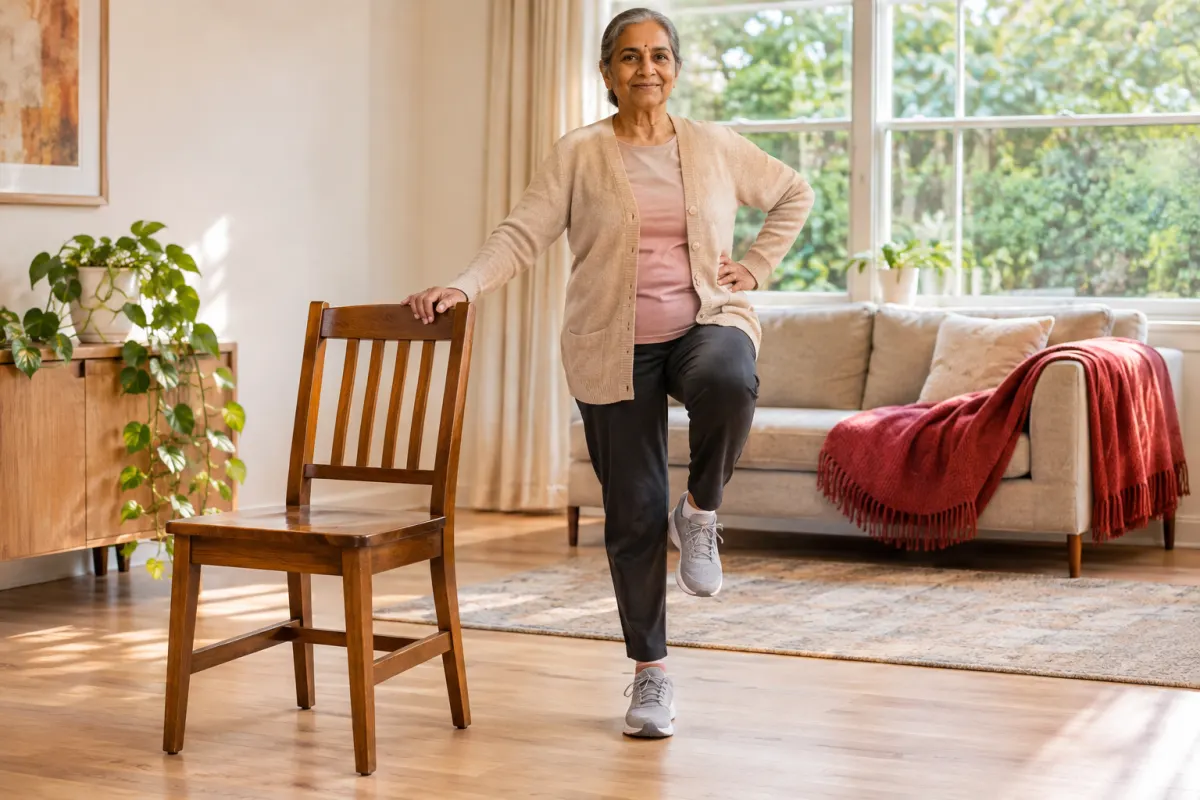
A broken bone almost always needs two things to happen at the same time: a bone that has become more fragile, and a force strong enough to break it. Most conversations about osteoporosis focus on the first half of that equation, which is why people hear so much about bone density, calcium and medication. The second half gets less attention, even though it is often the part you can change most quickly.
For many adults over 50, that force comes from a fall. A slip on an icy driveway, a missed step on the way to the bathroom at night, a trip over the edge of a rug. Falls from standing height should not usually break a healthy adult bone, but when bone has thinned, they often do.
This article, written for patients and caregivers in Ajax and across Durham Region, looks at falls through the lens of bone health. It explains why some falls are more likely than others to cause a fracture, what to do in the minutes and days after a fall, how strength and balance can be rebuilt, and where a bone density scan fits in. Our earlier article on osteoporosis prevention includes a home and winter safety checklist, so rather than repeat it, this piece goes deeper into the person, not the hallway.
Why the way you fall matters
Not every fall carries the same risk. The direction you fall and what hits the ground first shape which bone, if any, is likely to break.
- Falling sideways tends to put force directly on the outside of the hip. Hip fractures are among the most serious fractures in older adults, and many happen this way.
- Falling forward often leads people to put out a hand to catch themselves. That reflex protects the head and face, but it can break the wrist.
- Falling backward or landing hard in a seated position can injure the tailbone, pelvis or spine.
Spinal fractures deserve a special mention. In people with low bone density, a vertebra in the spine can compress after something as ordinary as bending, lifting a bag of groceries or a hard sit onto a chair. These fractures are sometimes not noticed at first. A gradual loss of height, a new rounding of the upper back or back pain that does not settle are all worth mentioning to your doctor.
Younger, stronger people often recover their balance mid-trip or fall with enough muscle control to soften the landing. As strength and reaction time decline, falls tend to happen faster and with less protection, which is one reason the same stumble can have very different outcomes at 40 and at 80.
Falls rarely have a single cause
When someone falls, it is natural to blame the obvious thing: the wet floor, the curb, the cat. But falls usually come from several smaller factors lining up at once. Health-care providers often think about them in groups.
Factors inside the body
- muscle weakness, particularly in the legs and hips
- slower reaction time and reduced balance
- changes in vision, including new glasses or bifocals that take time to adjust to
- numbness or reduced feeling in the feet, which can happen with diabetes and some other conditions
- foot pain, bunions or long toenails that change how you walk
- dizziness, especially a drop in blood pressure when standing up quickly
- needing to rush to the bathroom, especially at night
- memory changes or confusion
Factors from medications
Some medications can cause drowsiness, dizziness or low blood pressure, and the risk tends to rise when several are taken together. Sleep aids, some medications for mood or anxiety, certain pain medications and some blood pressure medications are among those that are often reviewed. Never stop a prescription on your own. Instead, ask your doctor or pharmacist for a medication review, especially after a fall or a near-miss.
Factors from daily habits
- getting up quickly from bed or a chair
- carrying laundry baskets or bags that block your view of your feet
- wearing loose slippers, socks on hard floors or shoes with worn soles
- walking in low light to avoid disturbing others
- drinking alcohol, which affects balance and judgment
Looking at your own situation through these three lenses often reveals two or three things you can change without much cost or effort.
Strength and balance can be rebuilt
One of the most encouraging facts about falls is that the body’s ability to prevent them can improve at almost any age. Leg strength, hip strength and balance respond to regular, appropriate exercise, even for people who have not been active in years.
Programs that focus on balance and strength are widely recommended for fall prevention. They often include:
- Sit-to-stand practice. Rising from a sturdy chair without using your hands, done slowly and with control.
- Heel and toe raises while holding onto a counter.
- Standing on one leg for short periods, near a counter or wall for support.
- Heel-to-toe walking along a hallway, again with something stable within reach.
- Tai chi, which many people find both enjoyable and effective for balance.
If you have osteoporosis, a previous spinal fracture or any condition that affects your joints or heart, check with your doctor or a physiotherapist before starting. They can tailor exercises to what is safe for you, since some movements, such as heavy lifting with a rounded back, may not be appropriate for fragile bones.
The goal is consistency rather than intensity. A few minutes most days often helps more than an occasional long session. Many community centres and seniors’ programs across Ajax, Pickering and Whitby offer group exercise classes, and a group can make it easier to keep going.
The fear of falling
After a fall, many people become understandably cautious. They walk less, avoid stairs, stop going out in winter and stay closer to home. It feels like the safe choice, but over time it can backfire. Less activity means weaker muscles and poorer balance, which can make a future fall more likely, not less.
If you notice this in yourself or in a parent, it is worth naming it with your doctor. A physiotherapist can help rebuild confidence alongside strength, and small aids such as a well-fitted cane or walker, a personal alarm or a phone kept within reach can help people stay active without feeling exposed.
What to do in the minutes after a fall
Knowing what to do before it happens can make a fall less frightening.
First, stay still for a moment
Do not rush to stand up. Take a breath, check yourself for pain, and notice whether you can move your arms and legs normally.
Call 911 if
- you cannot get up, or you have severe pain, especially in the hip, back or neck
- a limb looks bent out of shape or you see bone through the skin
- you hit your head and feel confused, drowsy, nauseated or have a severe headache, or you take blood thinners and hit your head
- you have chest pain, trouble breathing, sudden weakness on one side, or slurred speech
- you lost consciousness, even briefly
A community imaging clinic is not set up to provide emergency care. For any of these situations, call 911 or go to the nearest emergency department.
If you can get up safely
Roll onto your side, then onto your hands and knees. Crawl to a sturdy chair, place your hands on the seat, bring one foot forward and push up slowly, turning to sit down. Rest before you try to walk. Practising this movement with a physiotherapist, when you are well, can make it much easier if you ever need it.
In the following days
Pain that does not settle, swelling, bruising that keeps spreading or trouble putting weight on a limb should be checked by a health-care provider. They may recommend an X-ray to look for a fracture. Our guide to telling a fracture from a sprain explains how that decision is usually made. Rossland Diagnostic Clinic offers walk-in digital X-ray in Ajax; walk-in availability can change during the day, so call ahead to check, and call the clinic to confirm what paperwork to bring.
A fracture can be a message
Breaking a bone in a fall from standing height, or from a minor bump, is sometimes called a fragility fracture. It can be an important clue that bone has become weaker than expected. Many people treat the fracture, heal and move on without anyone asking why the bone broke so easily.
If you have had a fracture like this after the age of about 40, ask your doctor whether your bone health should be looked at more closely. That conversation might include a referral for a bone mineral density scan, which estimates bone strength at the hip and spine using low-energy X-ray. It is quick, painless and requires a physician’s referral.
Your doctor may combine the scan results with your age, fracture history and other risk factors to estimate your chance of another fracture. Our article on who should get a bone density test explains those risk factors in more detail.
Bone density and fall risk work together
It helps to think of fracture risk as two dials. One dial is bone strength, which a BMD scan can help measure. The other is fall risk, which no scan can show. Someone with only slightly low bone density who falls often may be at greater risk than someone with lower bone density who rarely falls.
That is why your care plan might include both kinds of steps: actions aimed at bone, such as nutrition, activity and sometimes medication, and actions aimed at falls, such as strength training, a medication review and changes at home. Neither replaces the other.
A short plan for the week ahead
If this article has you thinking, here is a realistic place to start:
- Write down any falls or near-falls from the last year, including when and where they happened.
- Make a list of every medication and supplement you take and ask your pharmacist to review it.
- Book an eye exam if it has been a while.
- Try two or three of the balance exercises above with a counter nearby, or ask your doctor about physiotherapy.
- Check the soles of your everyday shoes and slippers.
- If you have broken a bone from a minor fall, ask your doctor whether a bone density scan makes sense.
Our clinic is on the ground floor at Unit 102, 300 Rossland Road East in Ajax, with free parking close to the entrance. If your doctor has referred you for a bone density scan, call 905-426-3111 or request an appointment, and our team will help you prepare.