
Chest X-Ray in Ajax: Common Reasons Doctors Order One
Why might your doctor order a chest X-ray? Ajax patients can learn the common reasons, what the image shows and misses, and how to prepare for the visit.
· 9 min read
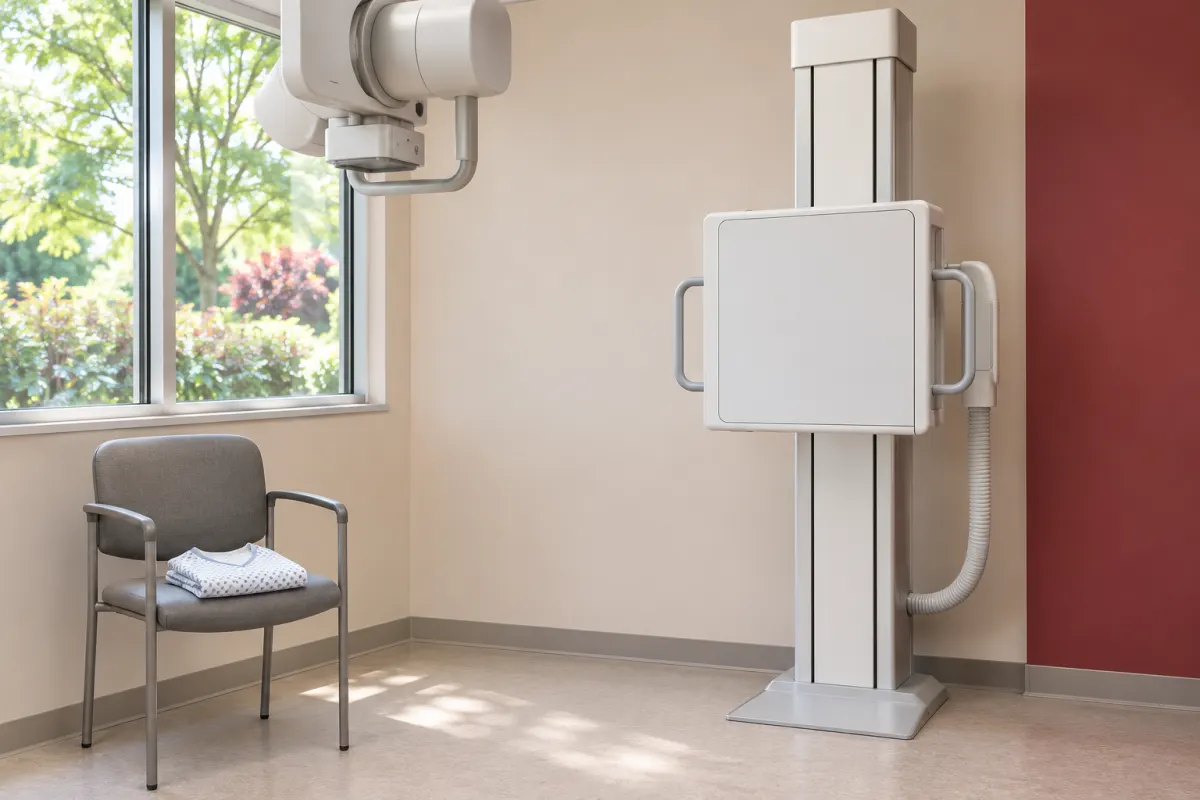
Of all the imaging tests a family doctor can order, the chest X-ray is probably the one people have heard of most often. It turns up in conversations about lingering coughs, pre-surgery check-ups, workplace health forms and immigration paperwork. Yet many patients leave the doctor’s office with a requisition in hand and only a vague sense of why the test was requested or what it is supposed to answer.
This article is meant to fill that gap. It walks through the most common reasons a health-care provider orders a chest X-ray, what the picture can and cannot show, and what the visit looks like for patients coming to us from Ajax, Pickering, Whitby and the surrounding area. It is general information, not a substitute for your own provider’s explanation. If you are unsure why your test was ordered, the best person to ask is the one who ordered it.
What a chest X-ray captures in a single picture
A chest X-ray, sometimes called a chest radiograph, is a quick image of the inside of your chest. In a fraction of a second, it records a view of several structures at once:
- The lungs, which normally appear mostly dark because they are full of air
- The heart, seen as a pale shape in the middle, along with the large blood vessels around it
- The diaphragm, the dome-shaped muscle beneath the lungs
- The bones of the chest, including the ribs, collarbones and parts of the spine
- The space around the lungs, where fluid or air can sometimes collect
Because so much is visible in one image, a chest X-ray works a little like an overview map. It rarely tells the whole story by itself, but it can show a provider where to look next, or reassure them that nothing obvious needs attention. For a deeper look at how X-rays differ from other imaging methods, our article on ultrasound vs X-ray covers the basics.
Reason one: a cough that will not settle
A persistent cough is one of the most frequent reasons people in Ajax and across Durham Region end up with a chest X-ray requisition. Most coughs that follow a cold clear up on their own, but when a cough drags on, changes in character, or comes with other symptoms, a provider may want a look at the lungs.
Some of the things a provider may be thinking about include:
- Whether there are signs of a chest infection such as pneumonia
- Whether there is fluid around the lungs
- Whether an area of the lung looks different from the rest and needs further investigation
A chest X-ray does not explain every cough. Many common causes, such as post-viral irritation, asthma, reflux or postnasal drip, may not show anything on the image at all. A clear X-ray is still useful information, because it helps a provider narrow down the possibilities.
Reason two: checking on a known chest infection
When someone has been diagnosed with pneumonia, a provider sometimes orders an X-ray to confirm the diagnosis, and sometimes orders another one later to see how things have changed. Whether a repeat image is needed depends on the person, their age and history, and how their symptoms are improving. It is not automatic for everyone.
If your provider has asked for a follow-up chest X-ray, it can help to remember that lungs often take longer to look completely clear on an X-ray than a person takes to feel better. That is one reason follow-up timing is a decision for your provider rather than something to rush.
Reason three: breathlessness and other heart and lung questions
Shortness of breath has many possible causes, from the lungs to the heart to blood counts and fitness levels. A chest X-ray is often one of the first tests a provider uses to sort through them. It can show the general size and outline of the heart, signs that fluid may be building up in or around the lungs, and changes in the lungs themselves.
What it cannot do is show how well the heart is pumping or how the valves are working. When a provider wants that kind of information, they turn to dedicated heart tests. At our clinic, the Durham Cardiology team provides cardiac testing such as echocardiograms, stress testing and heart monitoring, which look at the heart in ways a plain X-ray cannot.
Reason four: before a procedure or as a baseline
Some patients are surprised to be sent for a chest X-ray when they feel perfectly well. There are a few common situations where that happens:
- Before certain surgeries or procedures, where a provider or anaesthesia team wants a recent picture of the heart and lungs
- As a baseline for someone with a long-term lung or heart condition, so future images have something to compare against
- For workplace or program requirements, where an organization has its own health screening rules
- For an immigration medical exam, which follows its own separate process
That last situation has specific steps involving a panel physician and electronic submission. If it applies to you, read our step-by-step IRCC guide rather than following the general advice here.
Reason five: chest wall pain, injury and rib concerns
After a fall or a blow to the chest, or with pain that seems to come from the chest wall, a provider may order a chest X-ray to look at the ribs and to make sure the lungs underneath look as expected. Small rib fractures are not always easy to see on a standard chest image, and a provider may order specific rib views or decide that the treatment would be the same either way. That is a judgment call for your provider.
An important note about chest pain
A community imaging clinic is not the right place for sudden or severe chest symptoms. If you have new chest pain or pressure, pain spreading to the arm, jaw or back, sudden shortness of breath, coughing up blood, or you feel faint, call 911 or go to the nearest emergency department. Hospitals can assess, image and treat in one place, which is what those situations need. A walk-in X-ray is meant for planned, non-urgent imaging after a provider has assessed you.
Why there are usually two pictures
Most standard chest X-ray exams include two views:
- A front-to-back view, usually taken with you standing and your chest against the detector, facing away from the X-ray tube. Standing helps the lungs fill fully and shows fluid levels more naturally.
- A side view, taken with your arms raised so they are out of the way.
Two views matter because the chest is three-dimensional. Something that sits behind the heart or overlaps a rib on one view may be clearer on the other. If the technologist takes an extra image, that is usually about getting a cleaner view, not a sign that something has been found.
You will be asked to take a deep breath and hold it for a moment for each image. A full breath expands the lungs and gives the clearest picture, and holding still prevents blur.
What a chest X-ray is not designed to show
Knowing the limits of the test helps keep expectations realistic:
- Very small changes in the lungs may not be visible on a plain X-ray. When a provider needs more detail, they may order a CT scan at a hospital or another facility.
- Heart function and valve movement need other tests.
- Blood clots in the lungs generally cannot be seen on a plain chest X-ray and require different imaging, which is an emergency department matter when suspected.
- Breast tissue is not assessed by a chest X-ray. Breast screening uses mammography, a different X-ray technique designed specifically for that purpose.
A “normal” result means nothing of concern was seen on that image. It does not replace your provider’s overall assessment.
Preparing for your chest X-ray
There is no fasting or special preparation for a routine chest X-ray. A few simple steps make the visit easier:
- Wear a top without metal such as zips, studs or decorative beads. A plain cotton T-shirt is ideal. You may be asked to change into a gown.
- Consider your bra. Underwire and metal hooks show up on chest images, so you may be asked to remove it. A sports bra without metal, or simply changing into a gown, avoids the question.
- Leave necklaces at home or be ready to take them off. Long hair clips and hair ties with metal may also need to come out if they hang over the upper chest or neck.
- Tell the technologist if you might be pregnant before the image is taken.
- Bring your health card and the requisition from your provider.
Our patient preparation page has general guidance for each type of exam if you are having more than one test.
How the walk-in visit works in Ajax
Chest X-rays at Rossland Diagnostic Clinic are offered through our walk-in digital X-ray service at Unit 102, 300 Rossland Road East in Ajax. The department is open Monday to Friday from 9:00am to 5:00pm and Saturday from 8:00am to 3:30pm, and closed Sunday. Because it may close early once daily capacity is reached, please call 905-426-3111 before you leave home to check live availability. Free parking and ground-floor access make arrival straightforward, which is especially helpful if you are feeling unwell or short of breath.
Once you are called in, the exam itself is brief. Most of the time is spent changing and positioning, and the exposures take only seconds. If you have questions about radiation, our article on X-ray radiation safety explains how imaging teams keep doses low.
After the exam, the digital images are made available to physicians quickly, and a report is sent to the provider who ordered the test. If something urgent is found, the clinic alerts your physician promptly. Your provider is the person who will go over the results with you.
Questions people often ask
My doctor ordered a chest X-ray “just to be safe.” Should I be worried? Providers often order a chest X-ray to rule things out rather than because they expect to find something. If you are anxious, ask your provider what they are hoping to learn from the test. Knowing the question often makes the wait easier.
I had a chest X-ray last year. Will that help? Previous images can be very useful for comparison, especially if they were taken somewhere else. Let your provider know about earlier imaging, and mention it when you check in.
Can I bring my child for a chest X-ray? Please call the clinic before coming in to confirm what is available for younger patients.
Will I get my results before I leave? Results go to your ordering provider, who discusses them with you. The technologist’s role is to capture clear images, not to interpret them.
If your provider has given you a requisition for a chest X-ray, call Rossland Diagnostic Clinic at 905-426-3111 to check walk-in availability before you come. For other scheduled imaging, you can request an appointment online and our team will be in touch.